Is your dog exposed to
forever chemicals?
PFAS — per- and polyfluoroalkyl substances — are synthetic chemicals found in drinking water, cookware, furniture, and dog beds. They don't break down in the body. A 2023 study found that dogs exposed to PFAS show measurable changes in three routine blood markers — and those dogs may be warning us about our own exposure.
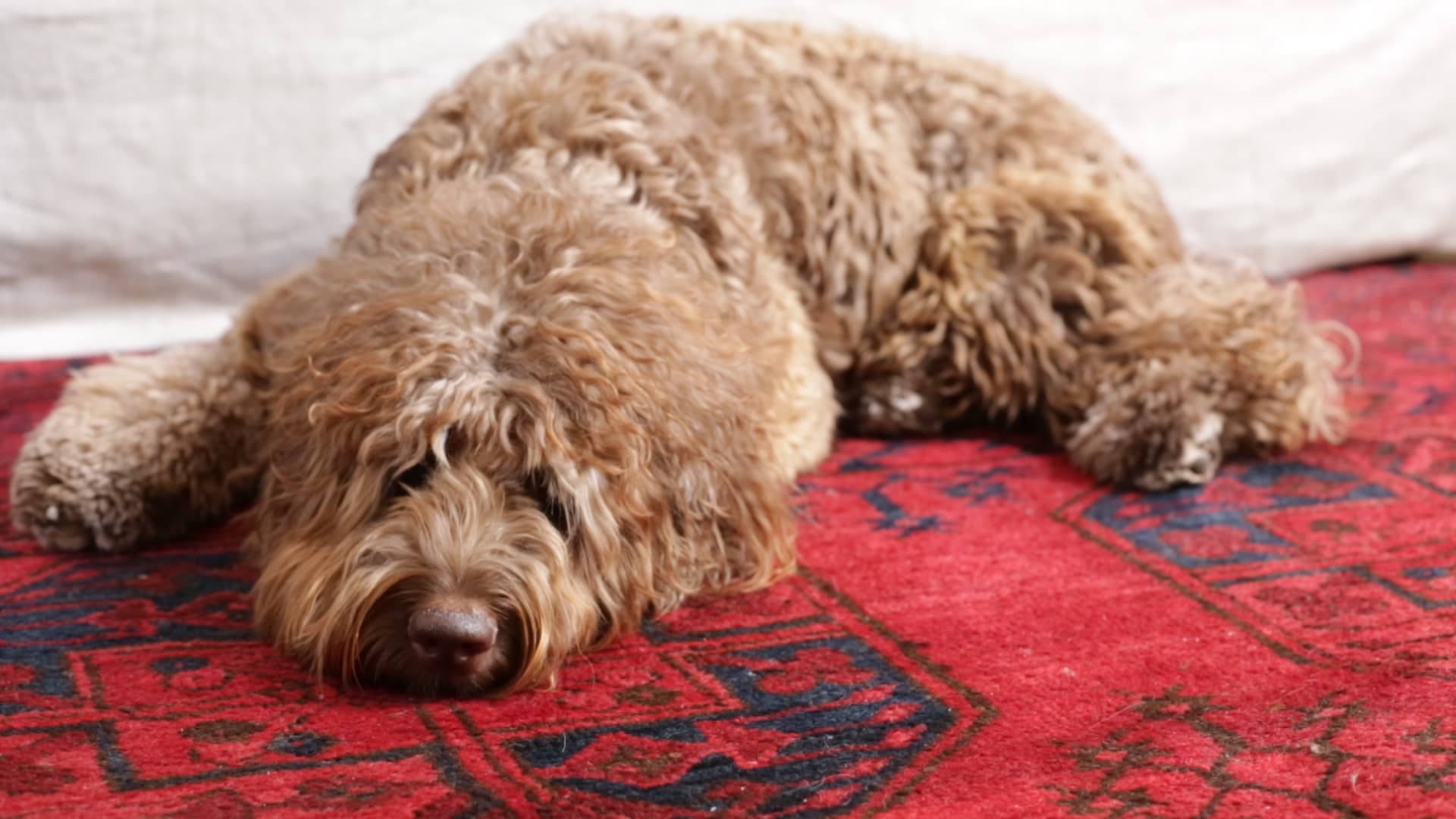
Your dog shares your home, your water, your air.
If they're exposed, you probably are too.
Dogs as sentinels.
In 2023, researchers at North Carolina State University studied dogs living in Gray's Creek, NC — a community near the Chemours/DuPont Fayetteville Works facility, one of the largest sources of PFAS contamination in the United States.
They found that dogs in the contamination zone showed a specific pattern of bloodwork changes: elevated alkaline phosphatase, elevated glucose, and depressed globulin proteins. These aren't obscure markers — they're part of the standard chemistry panel your vet already runs.
The key insight: dogs and humans share the same drinking water, the same indoor air, the same household surfaces.When a dog's bloodwork shows this pattern, it may be an early warning system for the entire household.
Read the study on PubMed →The 3 biomarkers
Alkaline Phosphatase (ALP)
Elevated in 38% of exposed dogsALP is a liver and bone enzyme that rises under metabolic stress. In the study, elevated ALP correlated with perfluoroheptanesulfonic acid (PFHpS) levels — suggesting the liver is working harder to process environmental chemicals.
Glucose
Elevated in 21% of exposed dogsBlood glucose regulation is sensitive to endocrine disruption. PFAS compounds are known endocrine disruptors, and elevated glucose in exposed dogs suggests metabolic stress — even before clinical diabetes develops.
Globulin
Depressed in 31% of exposed dogsGlobulin proteins are central to immune function. Depressed globulin suggests immune suppression — the body's defense system is compromised. This is consistent with PFAS immunotoxicity observed in other species, including humans.
Where PFAS hide in your home.
Unfiltered tap or well water
High riskPFAS contamination in drinking water is the #1 exposure route. Municipal water systems near military bases, airports, and industrial sites are highest risk. Wells near these sites are especially vulnerable.
→Install a reverse-osmosis filter or NSF-certified activated carbon filter.
Non-stick cookware
Moderate riskTeflon and similar non-stick coatings contain PFAS compounds that degrade at high temperatures. When you cook your dog's food in non-stick pans, those chemicals transfer to the food.
→Switch to cast iron, stainless steel, or ceramic cookware.
Stain-resistant fabrics
Moderate riskScotchgard-treated carpets, furniture, and dog beds contain PFAS. Dogs sleep on, roll in, and chew these surfaces. Puppies and senior dogs are most vulnerable due to higher surface-to-body-weight contact.
→Choose untreated, organic cotton or wool dog beds. Avoid 'stain-resistant' labels.
Home built before 2005
Low-Moderate riskOlder homes are more likely to have PFAS-treated carpets, older plumbing with contaminated water infrastructure, and legacy chemical treatments in fabrics and furnishings.
→Test your water. Replace old carpet with hardwood, tile, or untreated rugs.
Proximity to industrial sites
High riskLiving within 5 miles of military bases, airports, firefighter training facilities, or chemical manufacturing plants significantly increases PFAS exposure through groundwater and air contamination.
→Check your address on the EPA's PFAS contamination map. Test well water annually.
How Ned detects it.
Upload your dog's routine bloodwork. Ned checks ALP, glucose, and globulin against the PFAS biomarker pattern — and combines it with a household environmental questionnaire to give you a combined risk assessment. No special tests needed. Just the blood panel your vet already runs.
Upload bloodwork
Any standard chemistry panel. We check ALP, glucose, and globulin automatically.
Answer 5 questions
Water source, cookware, fabrics, home age, proximity to contamination sites.
See your risk profile
Combined bloodwork + environmental score with specific actions to reduce exposure.
Check your dog's PFAS exposure.
Free. Takes 2 minutes. All you need is a routine blood panel.
Based on Rock KD, et al. (2023), “Domestic Dogs and Horses as Sentinels of Per- and Polyfluoroalkyl Substance Exposure and Associated Health Biomarkers,” Environ Sci Technol. PMID 37340551. This tool is for informational purposes only. Not a substitute for veterinary or medical care. PFAS exposure assessment is based on research correlations, not diagnostic testing.